What Can a Colonoscopy Detect?
Approximately 4.1% of women and 4.4% of men will develop colon or rectal cancer in their lifetimes, states the American Cancer Society. Fortunately, incident rates of colorectal cancer among adults over 50 years have dropped. Because more people are getting early screening tests through colonoscopies—making colorectal cancer one of the few preventable cancers.
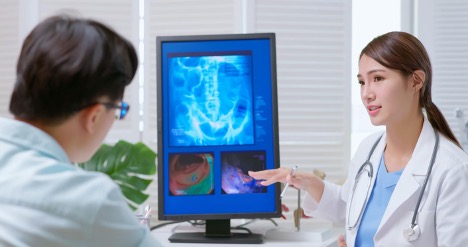
A colonoscopy candidate is an individual above 45 years with a family history of colorectal cancer or colon polyps who notices a sudden change in their bowel movements. Your doctor will recommend a colonoscopy procedure and refer you to a gastroenterologist. The test helps detect conditions like colon polyps, Inflammatory Bowel Disease (IBS), colitis, and diverticulosis, among others. Keep reading to learn what colorectal cancer screening of your small intestine and large intestine can detect.
Preventive Screening for Colorectal Cancer
Colorectal cancer (almost always) develops from abnormal, precancerous growths on the inner lining of the colon or rectum called polyps. Not all colon polyps turn cancerous, but over time and depending on the polyp, some evolve into colon cancer. For example;
- Adenomatous polyps, villous, tubulovillous, and tubular adenomas are considered precancerous because they sometimes grow into cancer.
- Although hyperplastic and inflammatory polyps are common, they’re not precancerous. Still, a patient with a sizable hyperplastic polyp measuring more than 1 cm in diameter might need a colonoscopy to rule out colorectal cancer.
- Colon polyps with a higher risk of turning into colorectal cancer include Traditional Serrated Adenomas (TSA) and Sessile Serrated Polyps (SSP).
Because colorectal cancer-causing polyps can be removed before they turn cancerous, a colonoscopy is the best test to help prevent this type of cancer.
Exploring Possible Causes of Gastrointestinal Diseases
The most common gastrointestinal conditions include constipation, IBS, Gastro-esophageal Reflux Disease (GERD), Crohn’s Disease, Ulcerative Colitis, Hemorrhoids, and polyps. Factors such as consuming a diet low in fiber, stress, overuse of antidiarrheal drugs, and lack of exercise can upset your gastrointestinal tract and its motility. A colonoscopy to investigate the entire gastrointestinal tract can help explore possible causes of unexplained bowel habit changes and screen for colon cancer.
Gastrointestinal Diseases a Colonoscopy Can Detect
During a colonoscopy procedure, a doctor will insert a colonoscope through your rectum and colon. This can reveal any irritated and inflamed tissue, polyps, ulcers, or cancer. Based on your symptoms, a radiologist may use a virtual colonoscopy to create images of your colon and rectum via an x-ray machine. Also called Computerized Tomography (CT) Colonography, the less-intrusive virtual colonoscopy is used when a colonoscopy might be unsafe due to other medical reasons. But, a CT colonography may not be as effective as a colonoscopy at detecting the following diseases;
- Cancerous and Precancerous Polyps
Precancerous polyps are extremely common to uncover during a colonoscopy. A colorectal cancer screening test, in this case, is vital for early detection. If polyps are found, your doctor will take biopsies for analysis. Sometimes a polyp(s) is too large to be safely extracted via a polypectomy (forceps or a wire loop) or laparoscope during screening. To that end, a GI physician may perform a total proctocolectomy. In order to remove the diseased portion of the bowel and prevent a polyp from developing into life-threatening cancer.
If you have cancer-related symptoms or a screening test has revealed abnormal tissue growth. Your doctor may recommend visual (structural) exams to rule out the risk of colon cancer. Because a colonoscopy can view the entire colon and rectum. It’s among the most sensitive tests available for screening cancerous tissue, such as polyps.
During an examination, your doctor will look for abnormal-growing clumps of cells. Its shape is like flat bumps (Sessile) or mushrooms (Pedunculated) with bulbous heads. Depending on the cancer tissue location, size, and the number of polyps. Your doctor will recommend a biopsy, surgery, or active surveillance until intervention is deemed necessary.
Crohn’s disease may be challenging to diagnose because symptoms like abdominal pain, fever, rectal bleeding, fatigue, and blood in stool are similar to other intestinal disorders. Early screening is advisable as Crohn’s is an inflammatory bowel disease that can lead to life-threatening intestinal obstruction, scarring, or fistulas if left untreated. Colonoscopy and biopsy are the two most effective tests for detecting Crohn’s disease.
You may have ulcerative colitis when you experience diarrhea with blood or discharge, rectal bleeding, inability to defecate despite the urgency, fatigue, fever, weight loss, etc. A colonoscopy with tissue biopsy can help make a definitive diagnosis. Examining the intestinal lining for inflammation also rules out complications related to an IBS disease like Crohn’s disease or infections caused by parasites, viruses, and bacteria.
- Diverticulosis, Diverticular Bleeding, and Diverticulitis
Diverticulosis of the colon occurs when one or more bulging pouches in the digestive system lining become inflamed or infected. Diverticulitis infection is caused by fecal impastation or when undigested food gets trapped in one of the pouches. Diverticular bleeding occurs due to chronic injury to the small blood vessels around the diverticular, while infected diverticula(s) result in diverticulitis.
If you have symptoms of diverticulitis, diverticulosis, or diverticular bleeding, a blood test or stool sample will help uncover signs of infection. Additionally, tissue samples is taken during a colonoscopy as your colon is checked for bleeding, abnormal tissue growths, ulcers, etc.
A colonoscopy is often not required to detect hemorrhoids because it’s a clinical diagnosis that can be made based on a physical examination of related symptoms. However, your doctor may recommend a colonoscopy to rule out colon cancer or anal fissures if accompanying symptoms include weight loss or chronic pain in the rectal area.
Can a Colonoscopy Detect IBS?
No. A colonoscopy is not needed for the detection of irritable bowel syndrome since a diagnosis can be made using a patient’s history and a physical examination. Still, your doctor may require a blood, stool, or hydrogen breath test, or even an upper GI endoscopy with a biopsy to rule out other possible causes of your symptoms.
Get Help for Your Stomach and Colon Problems
A colonoscopy can help diagnose the possible cause of abnormal rectal bleeding, abdominal pain, and chronic diarrhea, including precancerous or cancerous colon polyps. Studies by the National Cancer Institute suggest that colonoscopies can help reduce colorectal cancer mortality rates. Do not be a statistic. Contact our team of board-certified gastroenterologists for a full spectrum of services aimed at offering accurate diagnosis and cutting-edge treatment of gastrointestinal disorders.